
Work EA Builders
EA Builders
In productionConstruction & design-build
The system a builder runs projects on — schedule, site crew, attendance, payroll and materials — with a portal where the client watches their own build.
Projects tracked on a whiteboard and a group chat. Attendance written in a notebook on site, typed into a spreadsheet that evening, then typed again into payroll. Materials counted by walking around and looking. And clients ringing every week to ask how their build was going.
One board shows every project and what is holding up the finish date. The crew marked present on site becomes the pay run with nobody re-typing anything. Materials and machines are traceable to the project holding them. And clients check progress themselves, with photographs, instead of ringing the office.
What it does
The parts that matter to the owner
See every project at once
Projects grouped by stage, with a schedule that shows which task is actually holding the completion date rather than just listing everything.
Attendance becomes payroll
The crew is marked present on site and that fills the pay run directly. Casual workers can be paid without being added to the permanent roster, and payslips print six to a page at the end of the period.
Know where your materials and machines are
A company catalogue plus what is sitting on each site, so any pallet of tiles or piece of plant can be traced to the project holding it.
Is this job still making money?
Each project reports its own profitability as costs land — while there is still time to do something about it, rather than at the end.
Clients stop ringing for updates
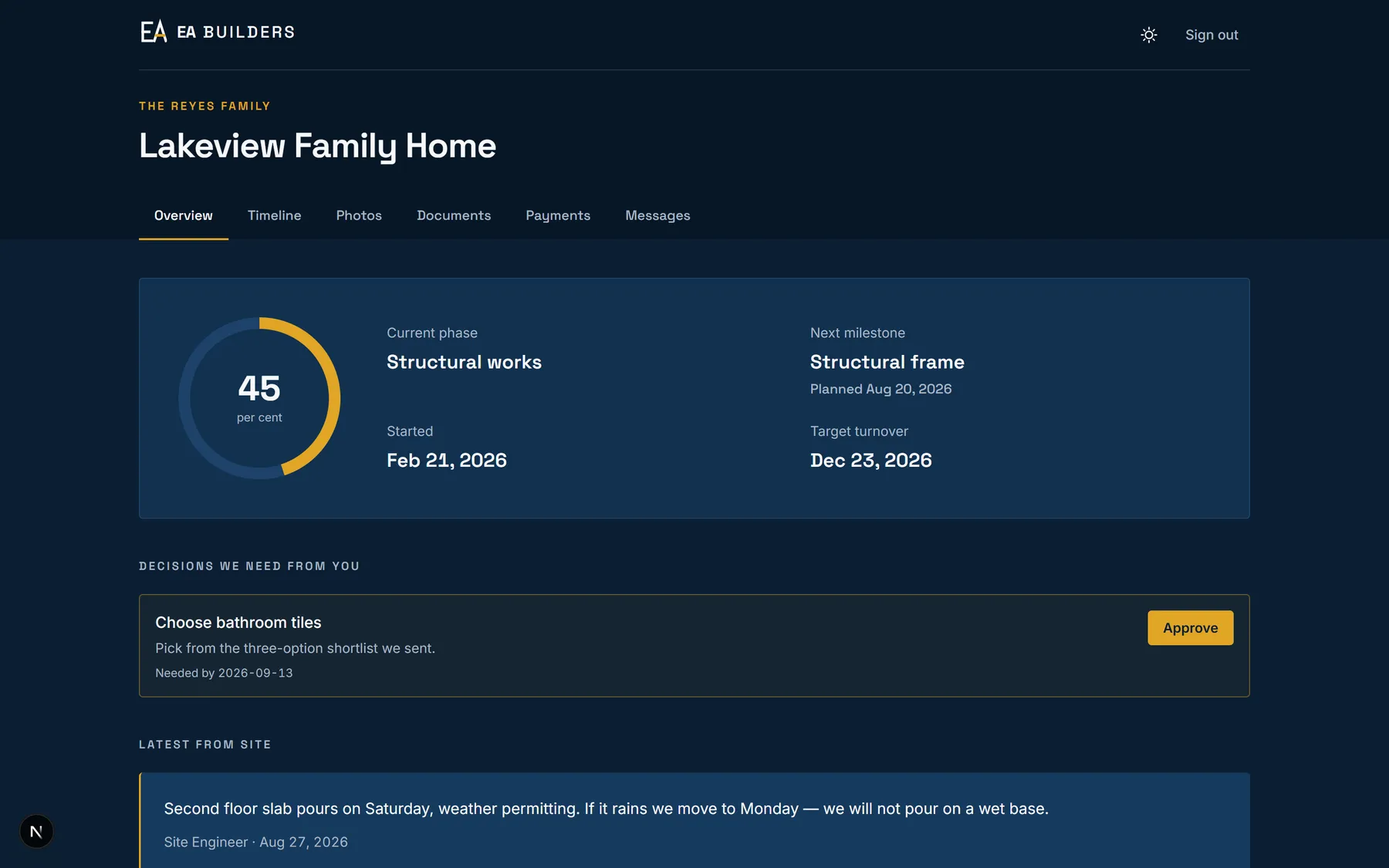
They sign in to their own project and see the timeline, site photographs, documents and the payment schedule.
Screens
A look inside
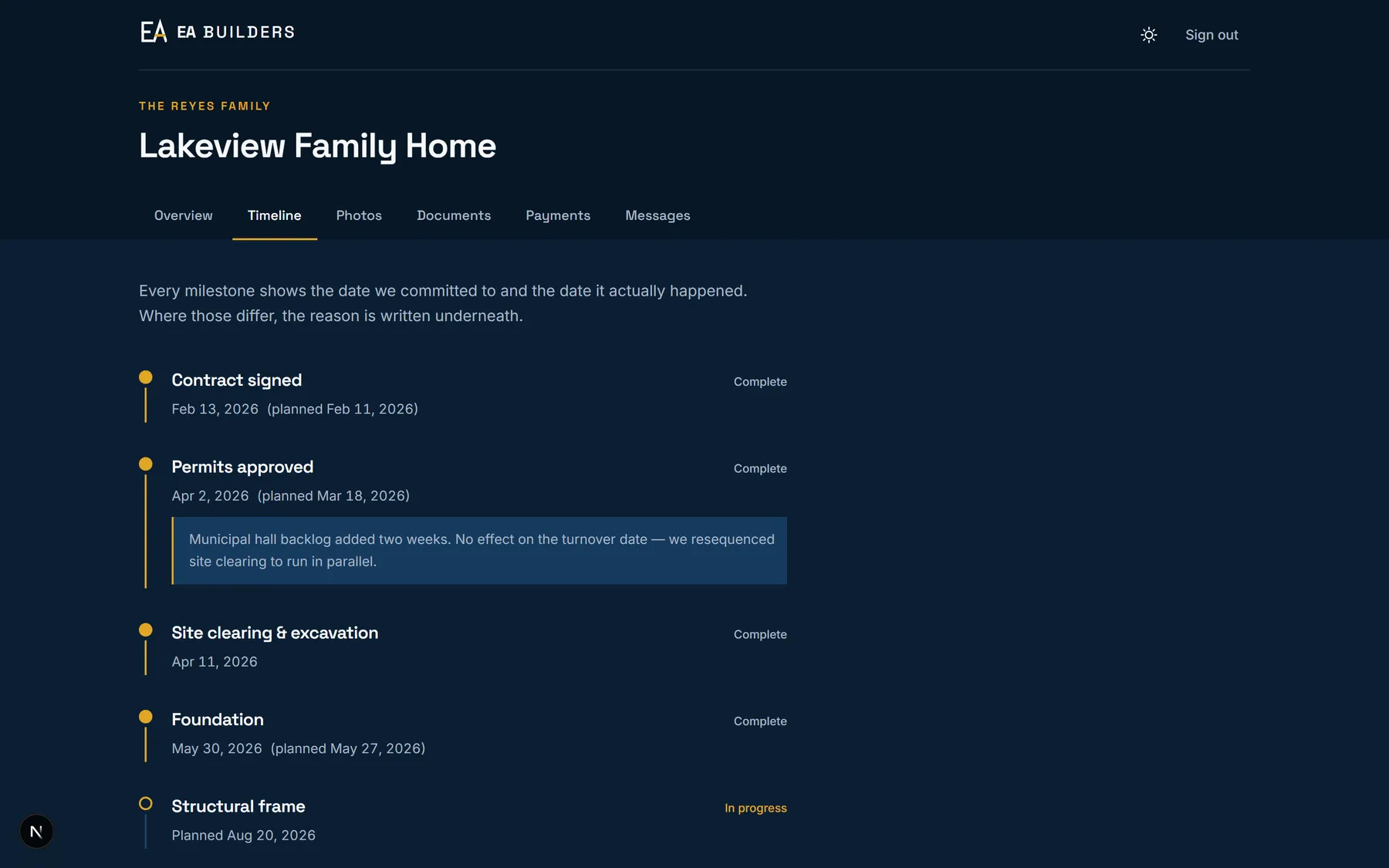
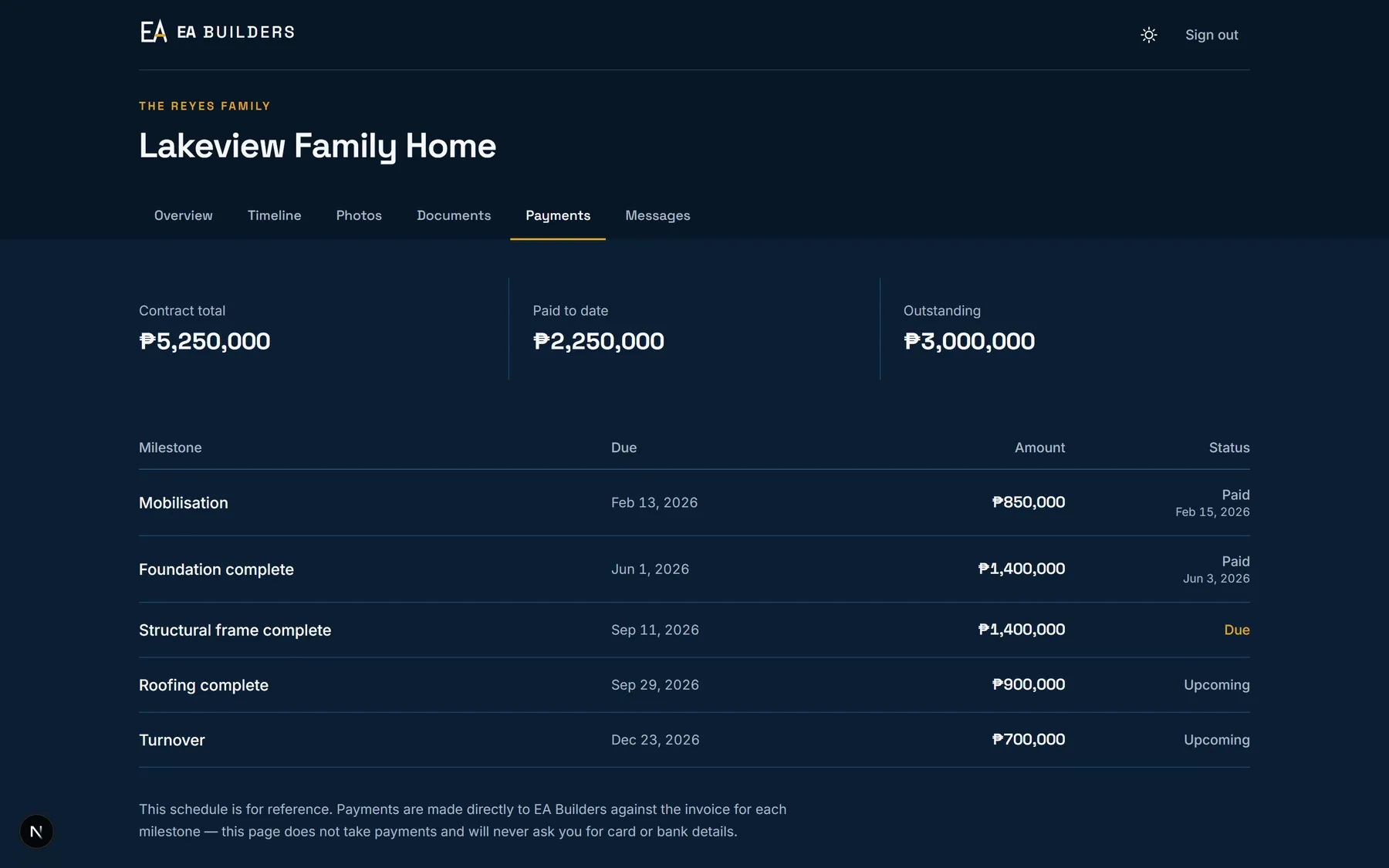
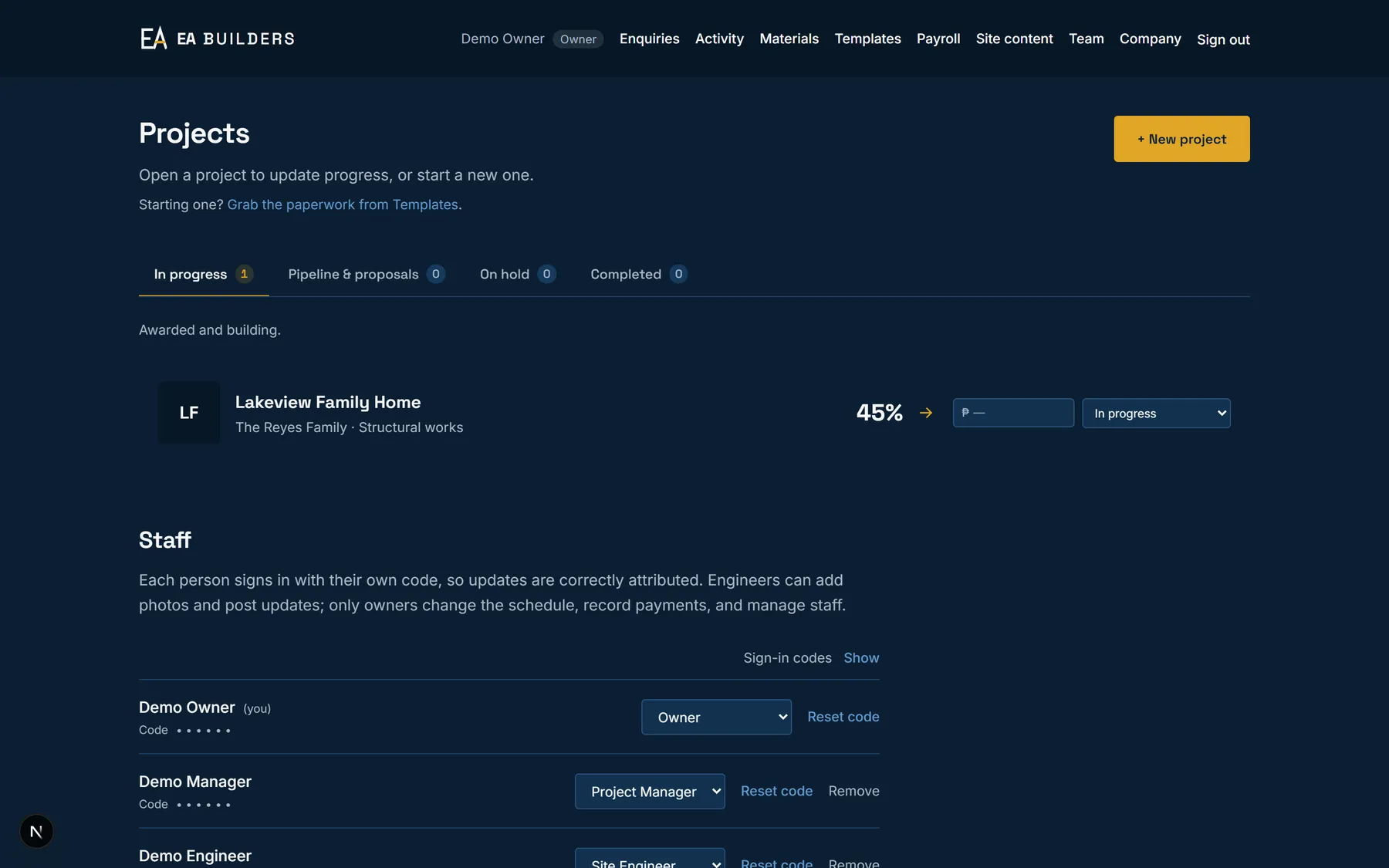
EA Builders came to us with no logo, no colours and no typeface — so the whole visual identity was designed from nothing alongside the software.
The system grew outwards from one problem. Attendance was being recorded three times: on paper at the site, in a spreadsheet that evening, and again in payroll at the end of the period. Fixing that one chain meant the roster, the projects and the pay run all had to know about each other, and once they did, the rest — materials, plant, project profitability, the client portal — followed naturally from the same information.